John the Baptist
“He must increase; I must decrease.”
The voice crying in the wilderness — yet the man who sent his own disciples away to someone else.
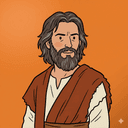
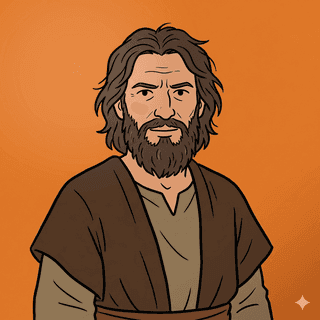
John the Baptist was a child miraculously born to the aged Zechariah and Elizabeth. An angel had told his father in advance of his calling: 'He will prepare the way for the Lord.' He grew up and went out into the wilderness — wearing camel's hair, a leather belt around his waist, eating locusts and wild honey. His message was simple: 'Repent, for the kingdom of heaven has come near.' And people streamed out of the cities into the wilderness, to be baptized by him in the Jordan River.
The most decisive moment of his life was the day his own cousin Jesus came to him. At first he refused: 'I need to be baptized by you.' But in the end he baptized Jesus. Heaven opened, and the Spirit descended like a dove in that place. After that, standing with his own disciples one day, he saw Jesus passing by and cried out, pointing: 'Look, the Lamb of God, who takes away the sin of the world.' From that day, the people who had followed him began to move toward Jesus instead.
When his own disciples complained, 'More people are going to him now,' he answered, 'He must become greater, but I must become less.' A self-understanding that had defined his whole life as a pointing finger. Yet even he eventually wavered. After speaking bluntly to Herod and being imprisoned, he sent men to ask, 'Are you the one who is to come?' Jesus did not rebuke him but told the messengers to report the signs they had seen. And he said to the crowd, 'Among those born of women there has risen no one greater than John the Baptist.' Beheaded by Herod, his whole life — every cry raised in the wilderness — was ultimately for pointing to one man.
The voice in the wilderness. He wore camel's hair, ate locusts and honey, and saw only one path. He prepared the way and grew smaller himself.
Defining Moments
The events that made this person who they were
Crying Out in the Wilderness — Repent
In the Judean wilderness, wearing camel's hair, eating locusts and wild honey, he cries out, 'Repent, for the kingdom of heaven has come near.' People stream out of the cities into the wilderness.
Pointing to Jesus and Crying, 'The Lamb of God'
Standing with his own disciples one day, he sees Jesus passing by. 'Look, the Lamb of God, who takes away the sin of the world.' He sends the people who had been following him toward Jesus instead.
'He Must Become Greater; I Must Become Less'
When his own disciples complain, 'More people are going to him now,' he answers, 'He must become greater, but I must become less.' A self-understanding that defined his whole life as a pointing finger.
Personality
The colors revealed through their story
An Uncompromising, Straight-Talking Man
'You brood of vipers' to the Pharisees, 'It is not lawful for you to have your brother's wife' to Herod — he speaks the truth plainly even to power.
A Humility That Knows Exactly His Own Place
When people mistake him for the Messiah, he answers firmly: 'I am not the Christ. I am not worthy to untie his sandals.' He knows his own limits clearly.
An Honesty That Voices Doubt Even in Prison
Once imprisoned, he sends men to ask, 'Are you the one who is to come, or should we expect someone else?' Instead of a hero's myth, he shows human wavering exactly as it was.
★ Strengths
- The uncompromising language of truth
◐ Shadow
- Solitude can turn into disconnection
💡 On mobile, tap [Share] to send instantly via Messages, Instagram DM, and more.